By Ivano Magnifico, Product Manager AUTOMA
From the presentation “Back to the future: when the past is already the future”
SMART GRID DAYS 2025, 8 – 9 October 2025.
Are we using the data we receive from the monitoring systems of cathodic protection as we should? To understand this, let’s summarise the history, the current situation and the future of pipeline monitoring, particularly focusing on what we take for granted and what seems normal because we see it every day.
In this article and the previous one, we talk about monitoring methods and how to optimise data transmission, showing you some concrete examples.
With this content, we are mainly addressing foreign readers, who have different management practices than those we have in Italy. However, in any case, the recap can also be useful for us Italians to see if we are working to the best of our abilities.
Remote monitoring for cathodic protection
For a definition of remote monitoring, please click here.
Let’s now see how the information collected can help us carry out our daily business. In order to have effective and efficient cathodic protection, the first thing to do is to check that the devices we use (e.g. power supplies, decoupling devices, mitigation devices, etc.) are working properly. ISO 15589-1 gives us an indication of the devices that must be checked for cathodic protection:
- Cathodic protection rectifiers
- Unidirectional drainage station
- Connections to third-party structures (resistive or direct)
- AC/DC decoupling devices
- Galvanic anodes
- Measurement points
Rectifier: monitoring parameters
Below are theparameters to be monitored in the rectifier to make sure it is working properly.
- DC output current
- DC output voltage
- AC output voltage: alarm if average value > defined threshold
- Presence/absence of main power supply (real-time alarm)
- DC potential structure and AC voltage
- OFF potential on structure
- Instant-off on coupons to measure IR-free potential
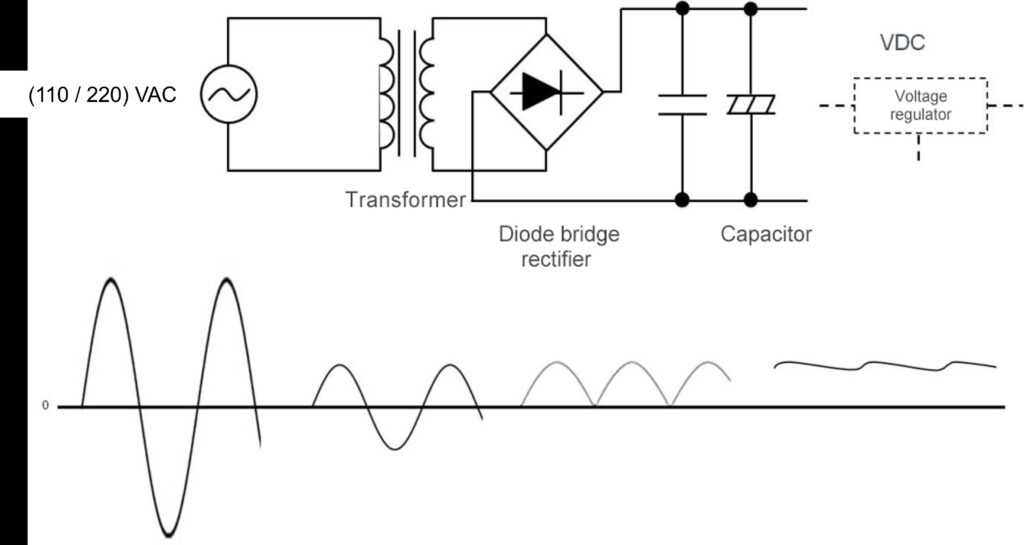
When we talk about gas distribution networks within cities, one of the most critical aspects is the life time of the ICCP anode: as long as the ICCP anode is operational, we are able to supply power, but when it wears out, it becomes a problem because it can take up to one or two years to obtain the permits to carry out the work. Therefore, it would be convenient if, in addition to the other information that comes to us, we could also know if and when the ICCP anode is reaching the end of its service life.
Rectifier: assessing the status of the ICCP anode
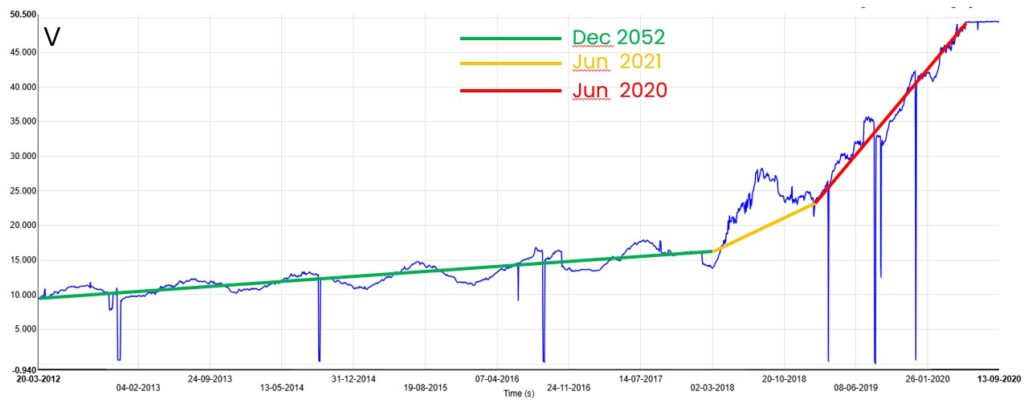
In the graph below, we are not measuring impedance (the ratio between voltage and current) to evaluate the total resistance of the circuit, but we are only measuring the output voltage on a rectifier that has always operated at constant current; therefore, the voltage trend follows the trend of the total impedance seen by the rectifier.
The reference period is 2012-2020. Looking at the graph, we clearly recognise the seasonal trend, i.e. the change in soil resistance between the summer and winter periods. However, it is also possible to detect a certain linearity, which is given by the trend of the volume loss of the ICCP anode over time. As we approach the end of service life, we lose this linear trend that tends to become exponential and this can help us predict even a couple of years in advance the moment when a new ICCP anode will be needed.
Unidirectional drainage
In the vicinity of a railway line, at the point where the interference creates an anode zone of current on our pipe that returns to the original circuit, we will need a drainage, if there are no other ways to solve the problem.
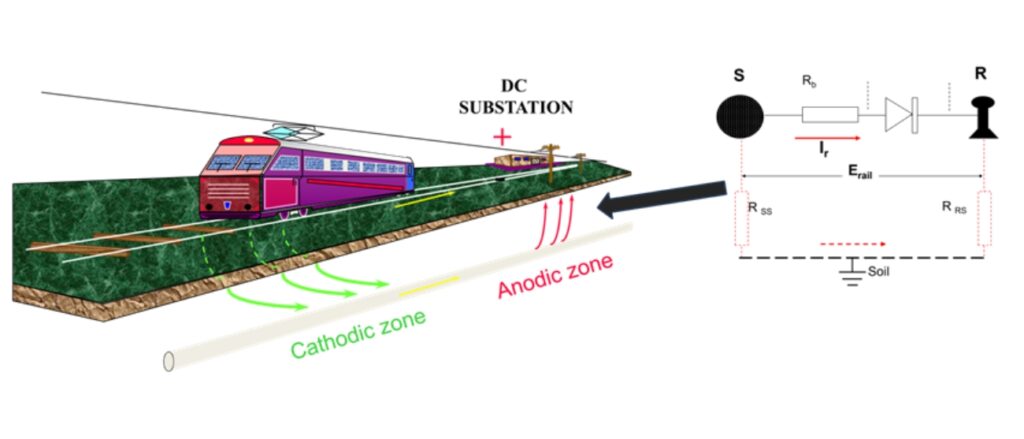
The purpose of drainage is to allow the current, which we absorb in the cathodic area from the railway line, to return via an electrical path to the rail and the substation to which it belongs. Clearly, we only want this current to flow back to the substation and not vice versa.
Another interesting parameter is the potential difference between the structure and the rail: when the structure is more positive than the rail, we expect current to drain, returning to the original circuit; whereas, when the polarisation is reversed, we do not expect current through the diode, because it is reverse polarised.
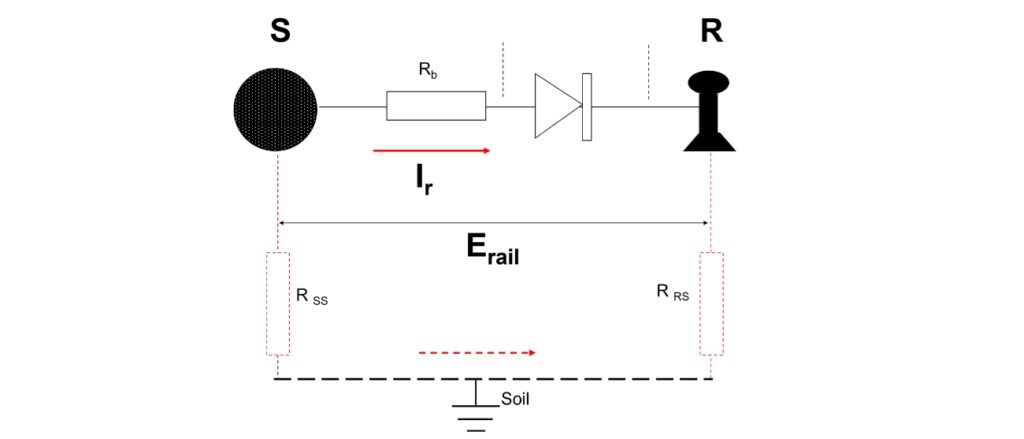
The monitoring parameters are:
- DC drain current
- Normal condition: Ir ≥ 0
- Alarm if Ir < 0 (damaged diode)
- Pipe-to-rail potential (Erail)
- Normal condition: -V < Erail < 0.7 V + Ir (Rb+Rpr)
(Rpr = parasitic resistance of the diode)
- Normal condition: -V < Erail < 0.7 V + Ir (Rb+Rpr)
- DC potential structure and AC voltage
- OFF potential on structure
- Instant-off on coupons to measure IR-free potential
- DC and AC current density on coupon
Real cases
Unidirectional drainage: diode failure detection
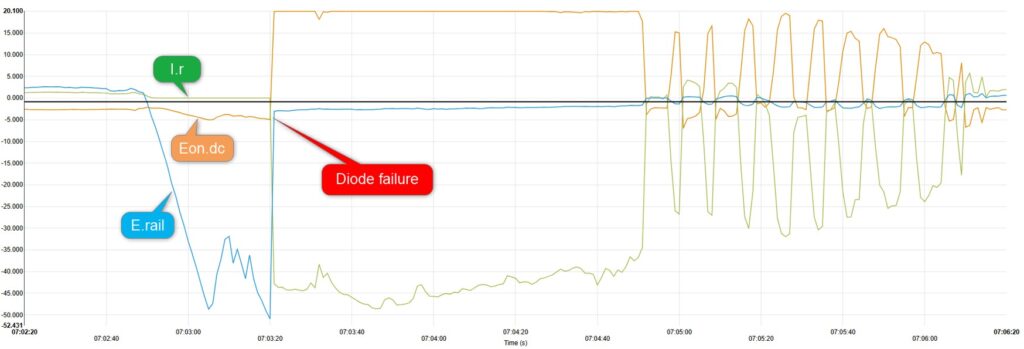
Let’s look at some practical examples. Below you see the diode current trend over a series of days; the current flows in one direction only until 22 May. As shown, after the fault, our pipeline is receiving 55A, 134A, 68A from the rail through an electrical connection: this current, however, must return to its original circuit. Generally, corrosion is not a rapid phenomenon, but in this case it can become so. Therefore, it is essential to receive an alarm so that prompt action can be taken.
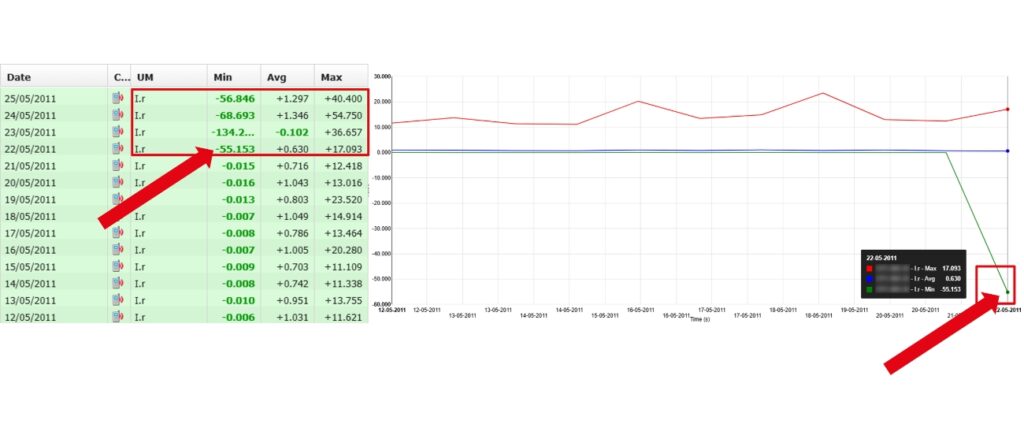
With reference to the Remote Datalogger Unit, it is interesting to point out that we can occasionally ask the device to download the measurement second by second in order to analyse in detail what happened; and that is what we did in this example. We downloaded the intensive measurement per second on the day the diode broke. Below we can see the drained current, the On potential and the tube-rail potential.
AC mitigation device: monitoring parameters
The AC decoupler is a large capacitor between the pipe and the grounding system, which allows the AC current to be discharged to the grounding system while remaining an open circuit for the DC current.
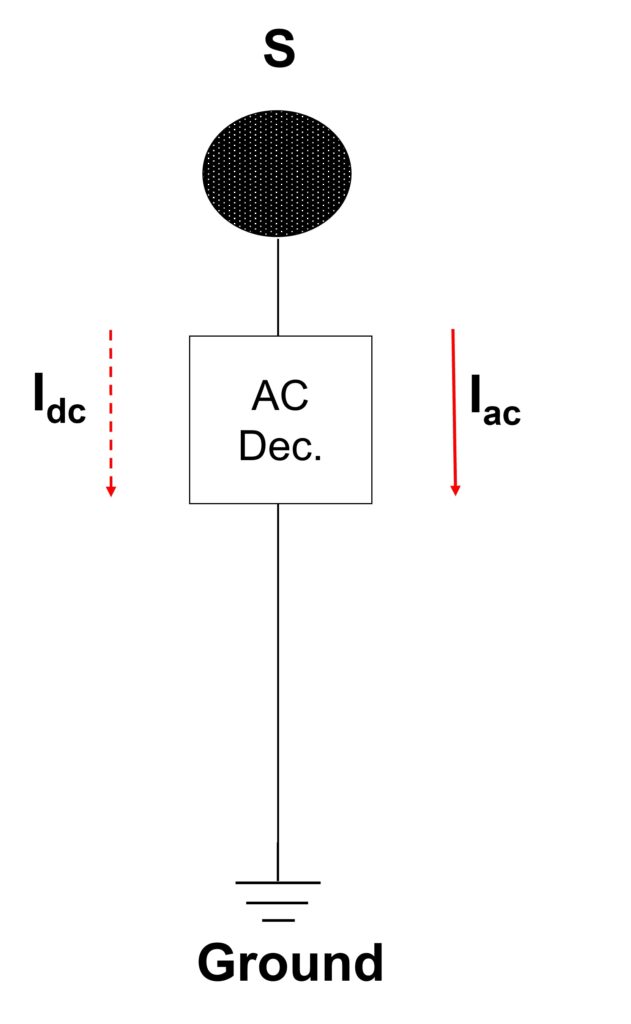
What do we monitor?
- AC current discharged;
- DC current:
- Normal condition: average IDC= 0
- Alarm if average IDC ≠ 0
(damaged decoupler, presence of resistive path)
- Grounding potential (Egnd):
- Alarm if Egnd drops to more negative values;
- DC potential on structure and AC voltage;
- OFF potential on structure;
- Instant-off on coupon to measure IR-free potential;
- DC and AC current density on coupon.
AC mitigation device: fault detection
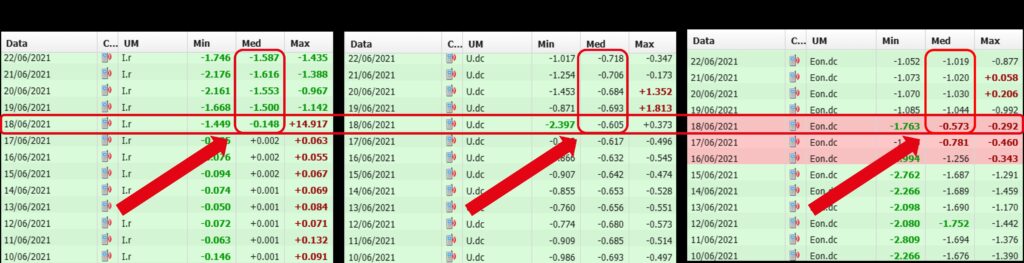
The daily report shows the direct current recorded over several days, until the day when the average value becomes different from zero.
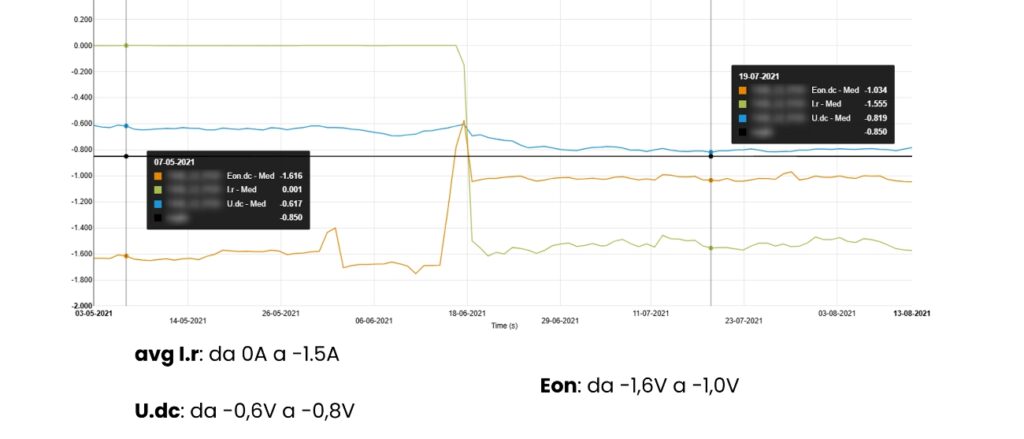
Taking the potential of the grounding system into consideration, we see that the variation is slight; this is because the ground network is very extensive and a lot of current is needed to generate a significant variation in potential. Instead, looking at the graph on the right, one can see that the potential varies greatly, going from -1.7 V to -1 V. In this case, we are far enough away from the rectifier that it does not realise that something is drawing current.Therefore, the rectifier continues to operate, losing 600-700 mV on the ON potential.
Therefore, we can identify the day and detect the presence of the fault, also analysing the temporal trend. This is important because if I have to do a historical analysis of the data – not only on this measurement point but on the other points of the system – having a signal that allows me to understand when the alternating current discharge device was not working properly also allows me to correlate the other values.
Effective cathodic protection
To ensure that cathodic protection is effective, ISO 15589-1 defines two steps:
- General assessment
- ON potential measurements performed on all measurement points or at least on selected ones.
- Detailed and comprehensive evaluation
- OFF potential measurements preferably carried out at all measurement points.
- When an OFF potential measurement on the pipe is not possible, OFF potential measurements are required using probes or coupons at significant time intervals.
The NACE SP0169 standard, which is equivalent to 15589-1, establishes the following criteria:
- A minimum of 100 mV cathodic polarisation.
- Structure-electrolyte potential equal to or more negative than -850 mV relative to a copper/copper sulphate saturated electrode (CSE).
- This potential can be a direct measurement of the polarised potential or an ON potential.
- Use of cathodic protection coupons to establish current density levels, corrosion potential, polarisation levels.
Evaluation of ON potential
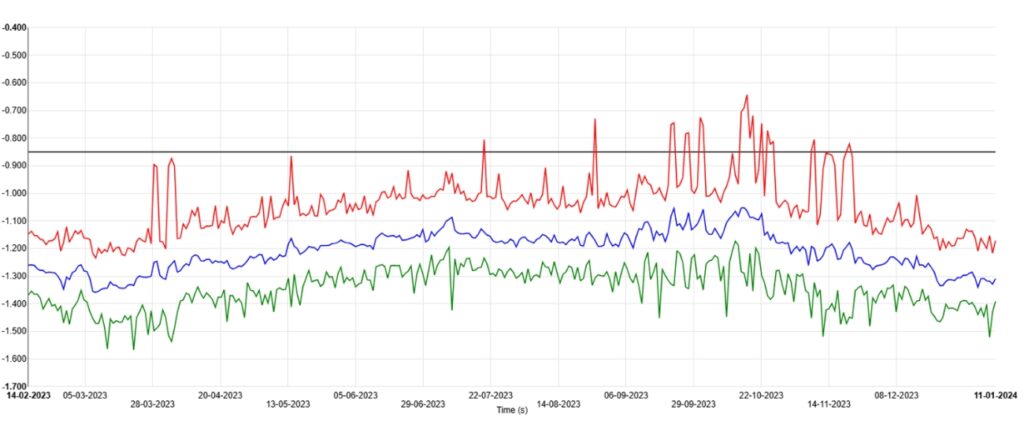
The graph below shows that we are protected during the year. There is, however, a period when the daily maximum is out of protection. This does not mean that we are in a serious risk of corrosion, because we must also evaluate the other information provided by the daily report (e.g. time out of protection).
Instant-off potential on coupon
Measurement Technique
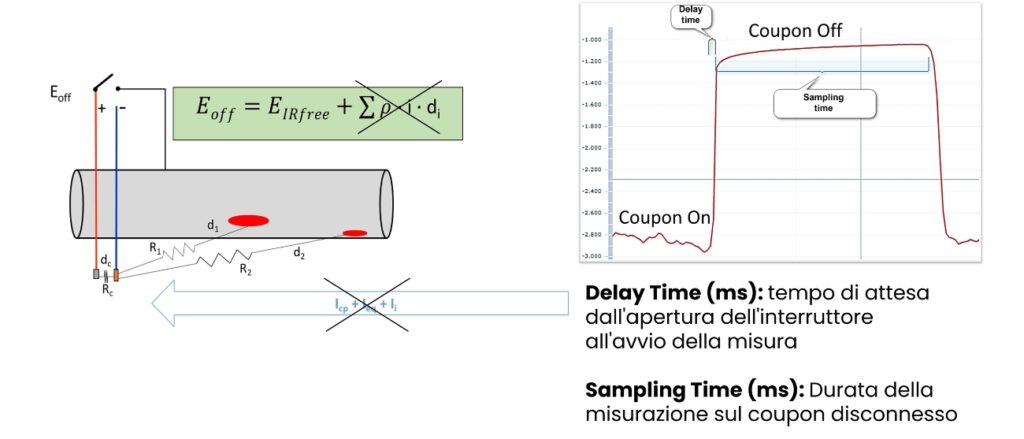
We perform the instant-off measurement with the coupon and manage to eliminate the IR drop. This is a measurement that we can do simply by taking the instant-off values: it is done over a few milliseconds and we can repeat it once per second. Therefore, we have a 1-1 ratio between instant-off potential on coupons and ON potential.
Daily report
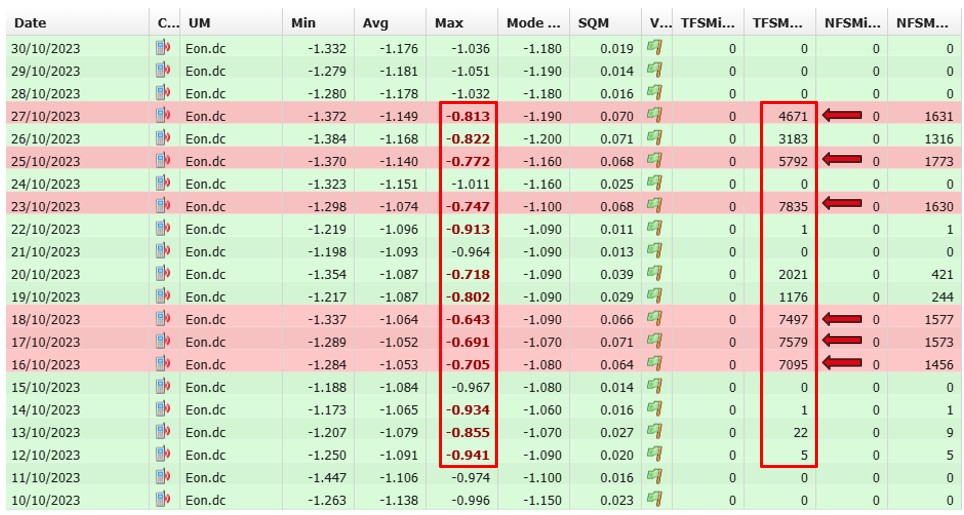
In the report below we see the measurement points, the out-of-protection maximums, and the out-of-protection times. In this case, the time out of protection of the ON potential is between two and five hours. So I might be induced to go into the field to find out what is going on.
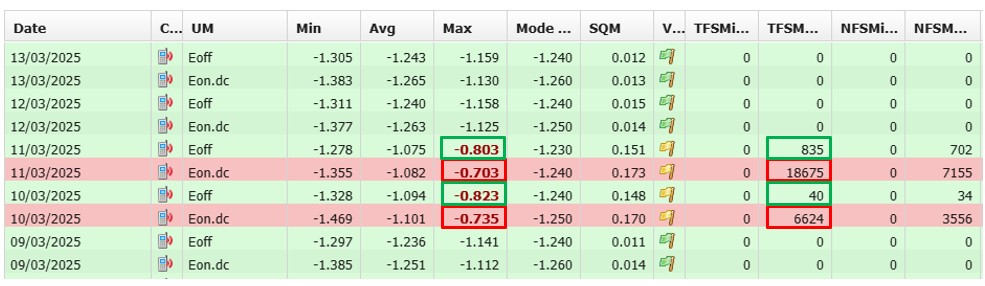
As I mentioned earlier, here we are assessing whether we are cathodic or not;we are unable to know what the IR-free potential is to compare with the criterion we apply. Coupons help us: if we take into consideration those same days and the instant-off measure on the coupon where we eliminated the IR, we see that the real time out of protection is negligible.
In a set of measurements where I may have several points where the ON potential is unprotected, the coupon measurement allows me to filter out all those points where there is actually only an ohmic drop in the ground and analyse where there is a real need.
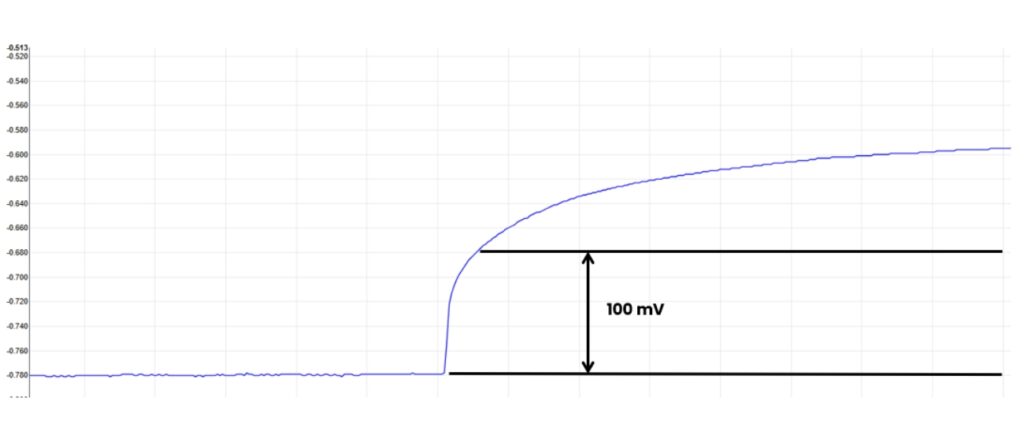
100 mV shift
Having the coupon and being able to control it remotely, we can also evaluate the 100 mV shift criterion: I can download the measurement second by second and make the evaluation.
DC interference
The graph below is interesting because we have the 24-hour ON potential and the instant-off potential on coupon. Having both measures allows us to assess the effect of interference. Looking at the night phase, the two lines are practically parallel. During the passage of trains, however, the ON potential chases all the currents circulating in the ground – these currents do not necessarily enter our structure. Therefore, the possibility of evaluating the two curves in parallel allows us to understand when the interference generates currents only towards the ground and when it also generates them towards the structure, resulting in cathodic and anodic conditions.
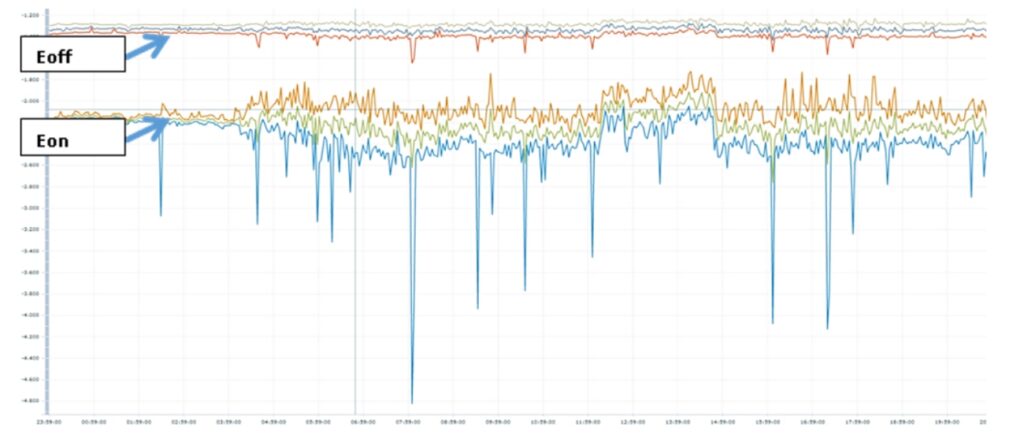
ON potential vs. instant-off on coupon
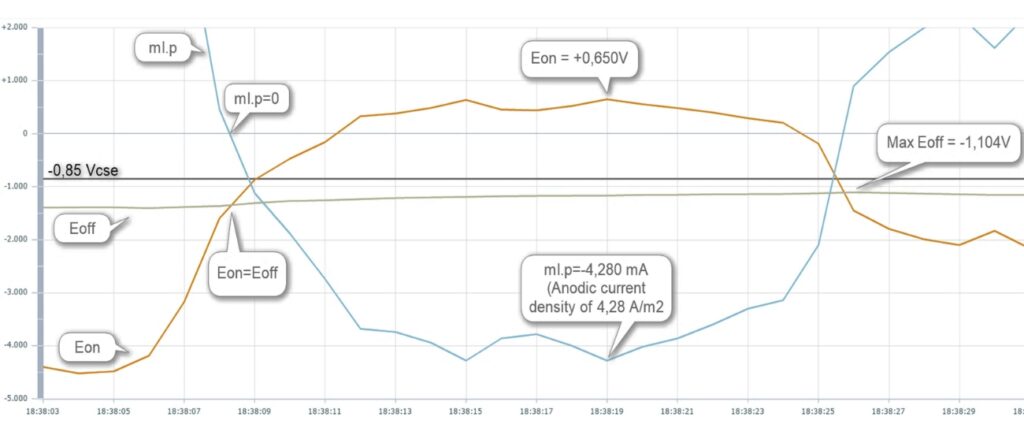
In the image below we report an example that is very interesting. In an interference condition, I download the measurement second by second. We have 30 seconds of measurement in which there are the ON potential and the current in the coupon. The current in the coupon when cathodic is positive and when anodic is negative. Thus, here we have the effect of an anodic interference that lasts approximately 15 seconds, with a maximum peak of 4 A/m2. Therefore, we have: anodic interference, 4 A/m2 current density, and positive ON potential (+ 0,65V CSE).
The first action one is tempted to take to eliminate a positive potential is to increase the current. However, in this case, by analysing the average daily values, we are heavily overprotected (-1.3 V CSE), so going to increase the current would make the situation even worse.
This is where the point we were making earlier comes into play: the importance of being able to assess the time out of protection. This is because if over the course of 24 hours the structure is protected, 30 seconds of anodic interference is not enough to generate a risk of corrosion. If we were instead to evaluate the instant-off potential during this interference, the most positive maximum value we would reach is -1.1 V. Therefore, it would be harmful to increase the current. If the rest of the cathodic protection system allowed it, we could even consider reducing the current slightly and attempting to exit the overprotection condition.
Therefore, depending on the quality and type of information I receive, I may even be led to make completely opposite choices, but at the risk of making the wrong ones. The more information I can obtain, the more convinced I will be of my actions because they are supported by data –reducing the probability of error.
AC interference
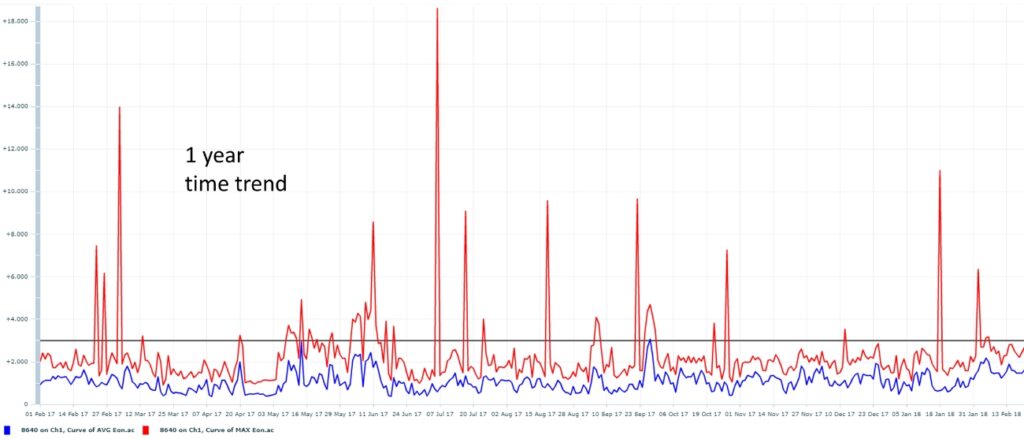
Alternating interference is rather insidious, as it is highly dependent on ground conditions. Soil conditions can vary throughout the year: a compliant measurement at a certain time of the year does not guarantee – unless I have continuous monitoring – that it will be equally compliant at another time of year.
If, in this case, the technician were to take a measurement, he would find 1.5 V of AC voltage. However, the graph below shows that there are times of the year when even 15 V is exceeded. With continuous monitoring I can get this information.
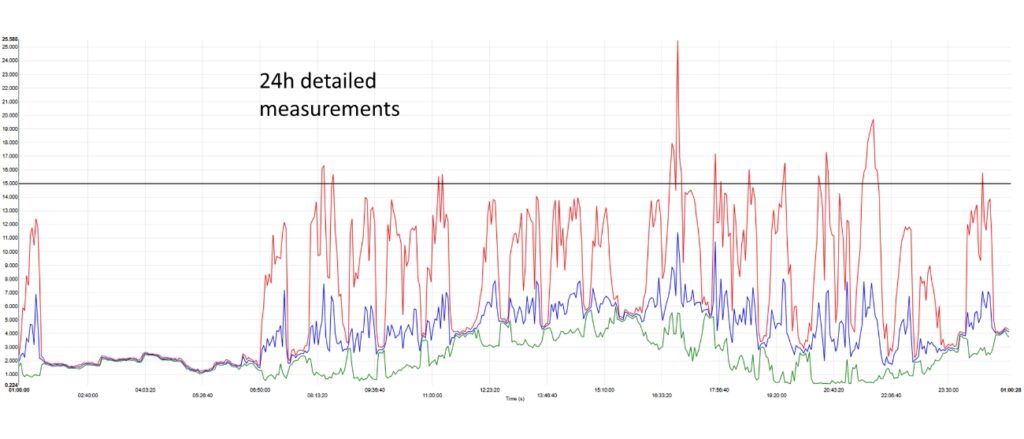
The graph below shows what can happen in industrial areas. Shown below is a 24-hour intensive measurement in an industrial area where there is probably a company with machinery with poor ground insulation. Therefore, we can count the machine cycles they are performing within 24 hours, and this may help us identify the source and request a solution to the problem.
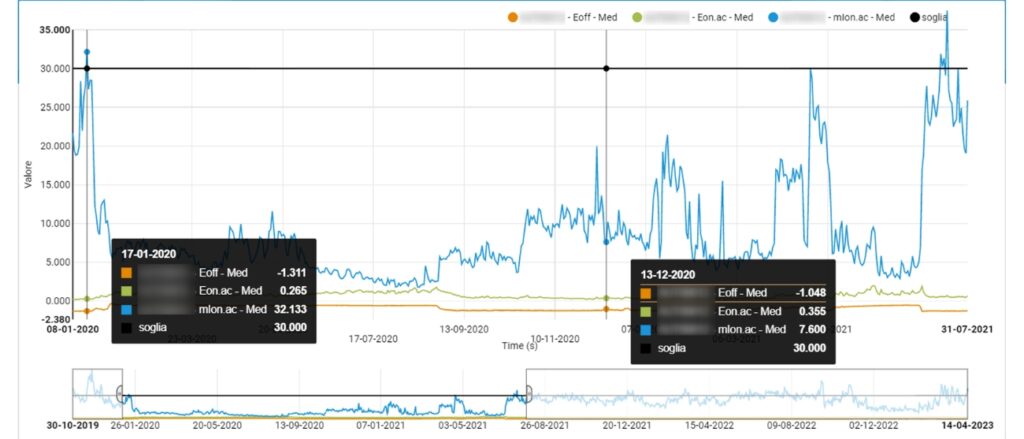
The AC density is very sensitive to changes in ground resistivity. So – given the same external conditions – I can have periods of the year when the density is above 30 A/m2, others when perhaps, with a higher resistivity (summer period), the density drops dramatically and then goes back up again.
The monitoring configuration in the presence of alternating interference becomes quite critical. What we can measure is:
- DC ON potential on structure and AC voltage;
- Instant off potential on DC coupon
(10 cm2 or other size, for evaluation of the protection criterion) - DC coupon current density
- DC and AC current density on AC coupon (1 cm2)
With this setup I can check the following criteria:
- -1.2V CSE < Instant off potential on coupon < -0.850V
(according to ISO 15589-1 and SP0169) - Average daily AC voltage < 15 Vac (according to ISO 18086 and SP0177)
- Daily average of Jac < 30 A/m2
(or Jac < 100 A/m2 if daily average Jdc < 1 A/m2)
(according to ISO 18086 and SP21424)
In this article and in the previous one we have seen something that for Italy it has been history for 25 years. The ability to integrate remote monitoring features with high-frequency measurement monitoring, typical of data loggers, allows – in the presence of local intelligence capable of processing such data – intelligent reporting, evaluation, and simple detection of conditions that are normally difficult to detect.
The technician does not disappear in this activity, but he stops being a driver: he can spend more time in the office, analysing concrete data and dealing with abnormal conditions – having consistent data.
At a time when human resources tend to be increasingly scarce in various cathodic protection groups, this type of assistance becomes essential for optimising all our activities.
Like Marty McFly in 1955,the rest of the world is finally reaching a future that for us has already been present for a quarter of a century. Italian technology has been the DeLorean, bringing innovation where it seemed impossible.
AUTOMA designs and produces innovative, Made in Italy hardware and software solutions for remote monitoring and control in the Oil, Gas and Water sectors.
We were born in 1987 in Italy, and today over 50,000 Automa devices are installed in more than 40 countries around the world.
Do you want to know the benefits for the security of your networks that you could have with the AUTOMA monitoring system for cathodic protection?
Contact our team without obligation and we will tell you what we can do to optimise your infrastructure control.

 Product Manager at Automa S.r.l.
Electronics engineer, he is certified as a Senior Technician in cathodic protection and specialises in market analysis and industry standards. With more than 15 years of experience in remote cathodic protection monitoring and a patent on an intelligent reference electrode, Ivano is a member of the Board of Directors of Ceocor (European Committee for the Study of Corrosion and Protection of Piping Systems) and Delegate of AMPP Italy Chapter, as well as an active member of the ISO and AMPP standard working groups for cathodic protection.