By Cristiano Fiameni, Technical Director of the Italian Gas Committee
From the speech ‘Methane emissions: the evolution of legislation’
SMART GRID DAYS 2025, 8 – 9 October 2025.
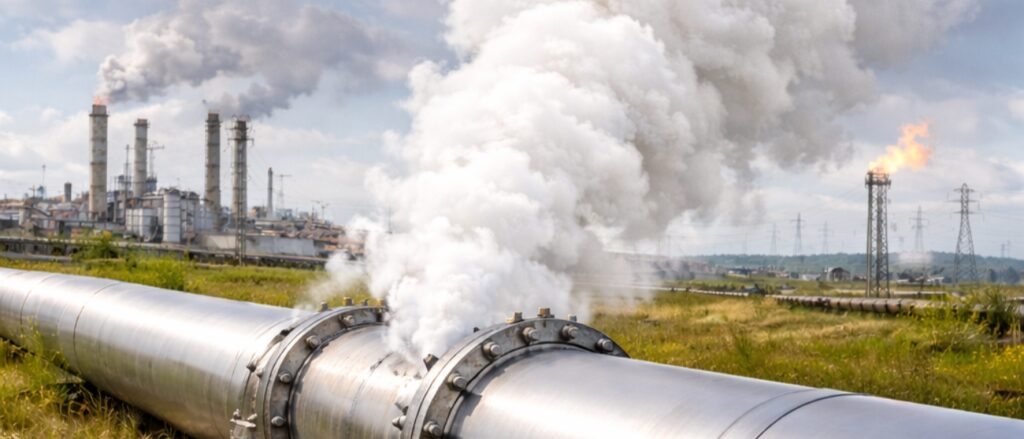
Methane emissions is a topic we cannot avoid addressing, since EU Regulation 2024/1787 on the reduction of methane emissions in the energy sector has been published. We will therefore see the guidelines along which the activity has developed during 2025 and the prospects we can glimpse in the application phase of this Regulation, which is particularly complex.
The operational challenges of the Methane Emissions Regulation
The Regulation was published in July 2024 and came into force on 4 August of the same year. It is important to emphasise this date, because a series of important deadlines originated from that moment.
This measure is particularity invasive. Indeed, it not only sets the objectives but also maps out the path, leaving little room for the technical sector and causing difficulties from an operational point of view, as it has strong limitations on the modalities that inevitably clash with the practical needs of operators.
As already mentioned, the main objective of the introduction of the Regulation is to reduce emissions; to this end, they must be researched, found, quantified, verified and repaired. This applies to the entire gas chain: transport, distribution, storage and regasification.
On the one hand, covering the entire supply chain is positive. But on the other hand, as the latter is very diverse, the tools to be used should be adapted to each portion of the supply chain. In reality, however, the regulation is one-size-fits-all, and provides a single way of operating regardless of whether one has to work on a regasification plant or on an urban network spread over a city of millions of inhabitants. The requirements and methods of intervention are therefore the same, and this is the crux of the matter from which the critical issues in the application of Regulation 2024/1787 arise.
The fulfilments of the Regulation
Since the entry into force of the Methane Emissions measure, there are several obligations: some are the responsibility of the Member States, while others are the responsibility of the operators or the Commission.
With regard to Member States, several European countries have not yet completed the process of appointing the competent authority. Italy, on the other hand, has already submitted a draft law and made available official e-mails from the MASE (Ministry of the Environment and Energy Security) to which operators can refer for communications.
As mentioned, the operators involved also have certain obligations: in August 2025, for example, they had to submit the first leakage research report (LDAR) on the previous year, and they also had to quantify emissions, using generic emission factors. This meant that even more precise assessments could be made, but the minimum required was the use of literature values of emission factors applied to one’s assets.
The Ministry reported that most operators were able to fulfil this obligation. There will be problems in the coming months, however, because from February 2026 operators will have to submit another report using emission factors specific to their asset. This requires operators to perform an important activity of evaluating their assets, and how to relate this data to factors that have a realistic place in their system. This is not easy so there will be difficulties.
In 2027, however, operators will have to submit a report quantifying emissions from one’s assets and verifying the measures taken on the ground against the results in the atmosphere, i.e., reconciliation. This is a rather ambitious challenge for the sector, given that the Regulation presented the requirements without all the necessary tools being available yet.
The supporting technical standards
Another issue to be taken into account is the instruments, i.e. the technical standards supporting the measure. Indeed, the Regulation not only stipulates that there must be technical standards to support this activity, but also provides that these standards can be recognised by the European Commission as implementing instruments. The body that draws up the standards is the CEN (European Committee for Standardisation), in which several European countries, including Italy, participate.
However, there are critical aspects to this path. The first aspect is that a specific request from the Commission (standardisation request) is needed to draw up standards. This request was submitted in 2024 and it took some time to reach a conclusion. The latest news tells us that the technical phase of discussions between the Commission and CEN has been concluded, and that the contract will be signed shortly. Since the contract provides three years to draft the standards, we could have them by the end of 2028. Therefore, we are faced with an asymmetry: the stricter requirements apply from 2027 onwards, while the standards will perhaps come into force at the beginning of 2028. This represents the first problem.
The second problem is that the Regulation has taken on the honours and burdens of precisely determining technical requirements as well, and this has become an obstacle. Indeed, the Regulation requires the Commission to publish a delegated act specifying the MDLs (Minimum Detection Limits) for technologies and providing guidance on the limits for pre-localisation. The point is that these values have not yet been defined.
An initial stakeholder consultation document came out in 2025, which was supposed to be the basis for producing a subsequent one. The deadline was 5 August 2025, but it was not met. Therefore, we are faced with a doublecritical issue: the first is related to technical standards that are not available due to delays in the Commission’s issuing of the required documents; the second concerns the practical aspect related to operators. The latter, indeed, have obligations that they cannot postpone, and in order to fulfil these obligations they must carry out activities in the field that require investments in technology and equipment.
It must therefore be considered that there are also investments made ‘in the dark’, hoping that industrial best practices will be considered in this delegated act and that consequently these investments will be recognised as valid. Unfortunately, it is a time of great uncertainty.
The work carried out so far and the next steps expected
What have we done in the meantime? The CIG, through the experts made available by its members, participated in the activities and contributed by bringing the Italian position to the European tables.
At European level, it is worth noting the contribution of Marcogaz, the international non-profit association representing the European gas industry, which has produced guidelines for the application of the Regulation. These guidelines provide guidance on the main aspects and introduce two useful elements for operators. Firstly, they provide illustrative diagrams of the process to be followed in accordance with the Regulation. In addition, they include a chapter on the cost-benefit analysis of the activity carried out: the repair of the leak must not cause more environmental damage than the leak itself.
This initial document provides some general guidelines that allow us to assume that this concept will be included in the standardisation request that the Commission will submit to CEN. If this is the case, CEN will be able to develop a chapter dedicated to guidance for operators on cases where the effort is not worthwhile. Especially for those working in the distribution sector, having such indications is very important because the numbers involved are really significant.
Marcogaz in 2024 published guidelines on the Venting & Flaring part and commented in detail on the first consultation paper on the limits proposed by the Commission, which were considered unrealistic for some applications. Indeed, there are both established and modern technologies, but it must be ensured that there is no one way to operate: a neutral approach must be taken in order to achieve the desired result.
In view of the Commission’s request, the CEN decided not to publish the draft on MRV (Monitoring, Reporting, Verification), which started in 2022, but to use it as a technical basis for developing the ongoing standards. The European Technical Committee CEN/TC 234 is developing, in parallel, three standards to support the implementation of the Regulation:
- The first is on the quantification of leaks and associated reporting – MRV (Art. 12).
- The second is on LDAR (Leak Detection and Repair) (Art. 14).
- The third is on Venting & Flaring (Art. 15, Art. 16).
Thus, CEN has already prepared drafts which, in order to be developed and sent to public enquiry, require the two documents we mentioned in the previous paragraphs: the standardisation request and the delegated act.
Lastly, the CIG worked on the drafting of a national guideline that, in compliance with legal requirements, would lead to the practical application of the Regulation for the distribution sector, trying to ‘hold together’ the obligations of the provision with the prescriptions of ARERA (Italian Regulatory Authority for Energy, Networks and Environment).
The activity was completed in November 2025 and was preliminarily presented to the MASE.
The Italian Gas Committee, established in 1953, aims to improve safety and efficiency in the use of combustible gases. In 1960, it joined the UNI, the Italian national standardisation body, thus becoming the official Italian body for standardisation in the fuel gas sector.
As an association comprising institutional and non-institutional members, the IGC covers with its members the entire supply chain, from gas import to transport, distribution, storage, utilisation, equipment, devices and installations.
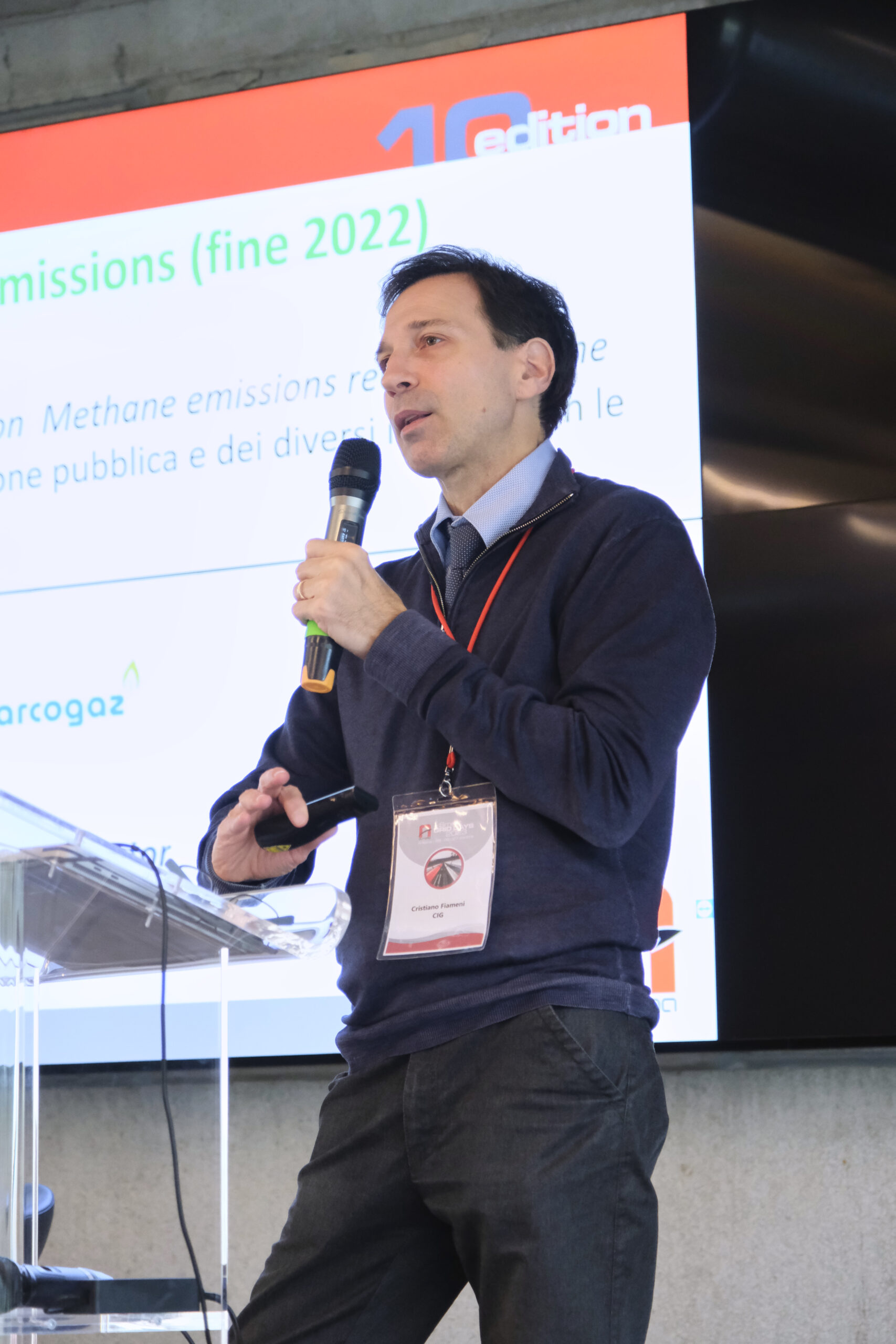
 Technical Director at the Italian Gas Committee
Within the Italian Gas Committee, a federated body of UNI specializing in the field of combustible gases, Eng. Cristiano Fiameni is responsible for technical standardization activities and the development of provided services, including training, seminars, and events.