Automa – Italy – Monitoraggio e telecontrollo reti oil, gas, water

Network Management

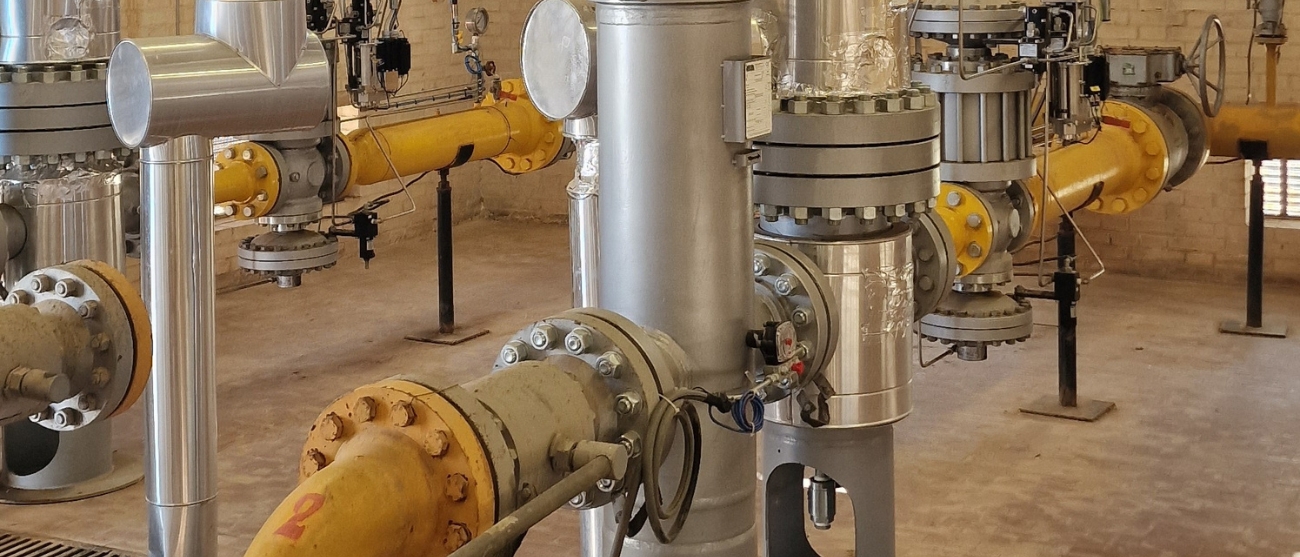
Ensuring gas flow rates always within the meter rangeability acting on the automatic regulation pressure value: in this article we tell you about the challenge won by AUTOMA’s GOLEM technology with the installation on an off-take station serving an antenna gas distribution network.

A project that ensures compliance with resolution 512/2021/R/gas, issued by the Italian Regulatory Authority for Energy, Networks and the Environment (ARERA), which requires the gas flow to be maintained within the limits allowed by the meter’s measurement range and, consequently, requires accurate monitoring and adequate flow control.

The Automa solution: GOLEM technology applied to flow control

The GOLEM technology, which is characterised by the ability to make the regulation of gas pressure dynamic and automatic without requiring substantial changes to existing systems, is based on a mechanically coupled servo mechanism which manages the adjustment screw of the regulator and makes it controllable.

Thanks to this innovative adaptation technology, the System can be applied to any pressure regulator, piloted or direct-acting, with a simple retrofit intervention. A solution that can be readily adapted and implemented, and which contributed to our client’s choice of GOLEM.

In this specific case, the operating logic of the GOLEM System has been modified to enable it to keep operating flow rates within the correct rangeability for which the meter was designed.

Considering that it cannot directly influence the plant’s gas demand – since this is determined by the downstream collection –, the System intervenes directly on the network pressure, modifying it to adapt the flow rate in cubic meters to the rangeability of the meter. Specifically, lowering the pressure lowers the flow rate in cubic meters and vice versa. This ability to directly regulate the pressure in the off-take station allows, actually, a direct control over flow rate in cubic meters to the meter.

In addition, the GOLEM operating logic has been optimised to allow flow rate control simultaneously with the management of an hourly pressure profile. Specifically, the pressure is lowered during the night and then brought back up to the desired range during the day, with a consequent significant reduction in fugitive emissions. 

Furthermore, to guarantee the safety and continuity of the System’s service, in addition to GOLEM’s internal algorithmic logic, there are mechanical limit switches that constantly monitor the pressure, ensuring that it does not exceed the set thresholds. Mechanical limit switches offer additional safety compared to algorithmic logic alone, protecting against any system anomalies. Indeed, when a limit switch is reached, the system stops and returns the pressure to its origin.

The results obtained thanks to GOLEM by AUTOMA

The implementation of GOLEM can be defined Plug&Play, as it does not require significant interventions on the mechanical and pneumatic part of the system. It is not necessary to modify the motorisation pressures or review existing connections, which considerably simplifies the installation process, and therefore the subsequent management and maintenance of the plant. This was a first, very important advantage for our customer.

From the very first months of activity, following the tuning phase in which the System was calibrated, the implementation of GOLEM on the off-take stations has allowed us to:

  •  get a significant reduction in out-of-threshold measurements
  •  make the measurement system more efficient
  •  significantly reduce the economic sanctions for measures outside the threshold
  •  significantly reduce fugitive emissions

Even the maintenance of the system proved to be extremely simple for our client to manage. In fact, with a simple action on a screw, it is possible to manually regulate the controller pilot or remove the servo motor and restore the reduction system to its original configuration in about 10 seconds. This greatly facilitates the work of maintenance technicians, allowing them to intervene on the pressure regulator, pilots, monitors and other components of the off-take station to carry out maintenance work in full compliance to current regulations.

The implementation of GOLEM in this project has produced extremely satisfactory results for our customer, while also improving operational efficiency.

With the AUTOMA solution it is possible to benefit from an immediate increase in efficiency and precision of pressure regulation, resulting in reduced gas leaks and operating costs. In addition, thanks to GOLEM, the system is able to reduce inefficiencies linked to changes in gas supply and demand. With a view to a possible integration of renewable sources, GOLEM is designed to also manage the injection of biomethane within natural gas networks, unlike many other solutions on the market.

AUTOMA has been active since 1987 in the development of hardware and software solutions for the monitoring and the remote control of gas transportation and distribution networks, functional to their operational management. As yet over 50,000 Automa devices are installed in more than 40 countries in the world.

Do you want to ensure that you regulate the gas network pressure safely and efficiently?

Contact our team without obligation and we’ll tell you how we can optimise the control and management of your infrastructure.


By Cristiano Fiameni, Technical Director Italian Gas Committee
From the presentation ‘Methane emissions: regulatory updates’
SMART GRID DAYS 2024, 18 – 19 September 2024.

What are the new regulations regarding Methane Emissions that have been finalised and are becoming operational?
In the spring of 2024, Regulation 2024/1787 on the reduction of methane emissions in the energy sector was approved first by the Parliament, then by the Council, and finally published in the Official Journal on 15 July 2024, entering into force on 4 August 2024.

This Regulation has a huge impact: it is directly applicable and does not require national transposition.

The whole gas supply chain is covered, because the Regulation deals with very different industry sectors (just think, for example, of the storage or regasification system and how completely different it is from a city distribution system) and this leads us to foresee some elements of difficulty from the application point of view, because it is difficult to have a single rule that works for all situations.

Let us look in detail at some highlights to better understand the state of affairs.

Enforcement of the Regulation on Methane Emissions

Regulation 2024/1787 lays down standards for accurately measuring, quantifying, monitoring, reporting and verifying methane emissions in the EU energy sector, as well as for reducing them.

The reduction can be achieved through investigations to detect and repair leaks, repair obligations and restrictions on venting and flaring. The Regulation also establishes standards on tools that ensure transparency with regard to methane emissions.

The Regulation apply:

  • the exploration and production of oil and gas, as well as the collection and processing of gas;
  • the transport and distribution of natural gas, except for measurement systems at the points of final consumption and the parts of the service lines between the distribution network and the measurement system located on the property of the final customers, as well as to underground storage and operations in LNG terminals and plants.
CIG per Automa gli aggiornamenti normativi sulle methane emissions

This applies to the entire supply chain concerning the distribution sector, therefore to the pipelines on public land, while measurement stations at the final customer are excluded.

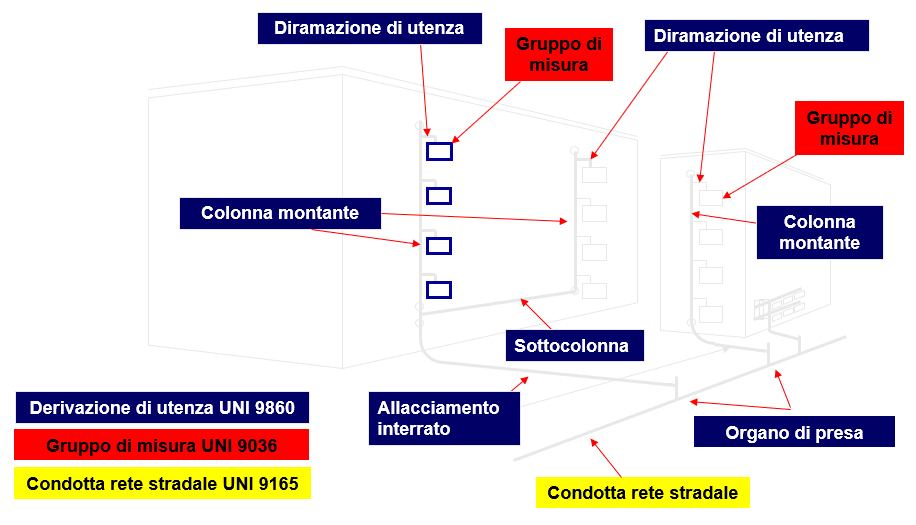
With regard to utility connections, there are critical issues from an application point of view, because the Regulation apply to connections, butfrom the property boundary to the meter are excluded, whereas on public land they are included.

Applications: Article 15

With regard to Article 15Restrictions on Venting and Flaring, the Regulation remains structured as before: there is a substantial ban except for emergency or safety reasons.

This approach may be correct in an industrial environment, but in a city network the situation becomes more complicated. So, in this case, it will be necessary to pay the utmost attention to safety and, in some routine activities, it will be necessary to do a flaring instead of a venting.

The competent authorities: appointments and critical issues

One or more competent authorities must be appointed by the Member State six months after the entry into force of the Regulation (i.e. by 5 February 2025). The competent authority will have to monitor and ensure compliance with the Regulation. In some cases, it may also intervene in inspection programmes and may impose sanctions with respect to compliance or non-compliance with the requirements of the Regulation.

On the other hand, operators must submit the report containing the first quantification of emissions to the competent authorities within one year.

The situation becomes more complicated because Article 12 of the Regulation talks about how this quantification activity should be carried out with respect to the technical standards currently being developed and to the provisions of Article 32, stating that ‘Until the date of application of these technical standards or regulations, operators and companies shall follow the most advanced industrial practices and use the best available technologies for measuring and quantifying methane emissions’. It goes on to state that ‘operators and companies established in the Union may use for these purposes the latest OGMP 2.0 technical guidance documents approved by 4 August 2024’.

Harmonised standards: drafting and approval

In Article 32 of the Regulation, the Commission asks CEN (European Standardisation Organisation) to work towards harmonised standards for:

  • the measurement and quantification of methane emissions referred to in Article 12(5);
  • the Leak Detection and Repair investigations referred to in Article 14(1);
  • the necessary equipment, as referred to in Article 15(3) and (5);
  • the quantification of methane emissions referred to in Article 18(3);

Once CEN has completed its task, the Commission assesses whether or not the draft standard it has received complies with its request and, if so, the standards are published in the Official Journal. However, the Commission may still adopt delegated acts to establish further standards or parts thereof. The deadline for drafting these standards is spring 2027.

Leaks detection and repair: critical issues (and positive aspects)

By 5 May 2025 for existing sites (and within 6 months from the date of entry into operation for new sites) operators must submit a leak detection and repair programme (LDAR programme) to the competent authorities.

The timeframe is therefore a bit tight, because the authority must be appointed by February 2025, then in May operators must present the programme and by August they must have carried out the first inspection.

How does detection work? After carrying out a leaks search (reference is made to Annex I and II of the Regulation), operators shall repair or replace all components in which there is an emission at or above the specified levels. To understand better: in the worst cases we can be at levels that are 500 or 1000 ppm, which is a very low value.

Once leaks have been detected, repairs should be made immediately if possible. This requirement applies more easily to an industrial site than, for example, the gas network of a large city. The Regulation further state that ‘If it cannot be carried out immediately after detection, the repair shall be attempted again as soon as possible and in any case within 5 days of detection and shall be completed within 30 days of detection.

Any delay in the repair must be justified with a report, resulting in a major administrative burden, even disproportionate to the operational intervention required.

The Regulation does, however, leave a small window of opportunity if it can be shown that the leaks are small and difficult to repair, so that continued monitoring and repair could cause environmental damage that outweighs the benefit of repair.

Marcogaz pre-normative activity

Marcogaz, the international non-profit association that represents the European gas industry, has drawn up pre-normative documents on the best techniques to be implemented to carry out specific activities. The relative documents are available on the website https://www.marcogaz.org and can be downloaded free of charge: it’s a series of 9 BATs (Best Available Techniques) regarding ‘Venting and Flaring’.

In 2024, BAT 0 was published, ‘Introductory document to the Best Available Techniques to Reduce Methane Emissions from Venting and Flaring Activities in the Mid-downstream Gas Sector‘.

The other BATs will be:

  • BAT 1 – Reduce pressure before venting
  • BAT 2 – Mobile recompression
  • BAT 3 – Stationary recompression
  • BAT 4 – Flaring as replacement of venting
  • BAT 5 – High bleed continuous pneumatics mitigation
  • BAT 6 – Electrical or pneumatic air starters
  • BAT 7 – Use of nitrogen to purge LNG pipes
  • BAT 8 – LNG truck loading – dry coupling connectors
  • BAT 9 – Excess flow valves in new service lines

In addition, a ‘Guidance for enhancing methane emission reduction and the application of the EU regulation on methane emission’ is being prepared.

At the regulatory level, an activity that started a few years ago on the emission quantification project is coming to an end, with three focuses:

  1. Gas infrastructure (the quantification and reporting part), regulated in Article 12 of the Regulation.
  2. Leak Detection and Repair, that is, how to carry out investigations and repair programmes, Article 14.
  3. Gas Infrastructure, that is, everything related to Venting and Flaring, Article 15.

As we have seen, the technical part supporting the operational articles of the Regulation is the subject of draft standards currently being developed at CEN level. The timeframe is not immediate, as these topics present two difficulties: an objective-technical one, because not everything is already available and consolidated, and an operational one, because at European level countries have different sensitivities.

Agreeing on the content of standards when there are varying national operational practices or regulations makes it even more difficult to conclude the task.

It should be noted, however, that there are many Italian experts who participate in these activities and try to make their own contribution.

The Italian Gas Committee, established in 1953, aims to improve safety and efficiency in the use of combustible gases. In 1960, it joined UNI, the Italian national standardisation body, thus becoming the official Italian body for standardisation in the fuel gas sector.

As an association comprising institutional and non-institutional members, the IGC covers with its members the entire supply chain, from gas import to transport, distribution, storage, utilisation, equipment, devices and installations.

The Global Methane Tracker 2024 report published by the International Energy Agency (IEA) reveals discouraging data: in 2023, methane emissions in the energy sector rose by 3 million tonnes compared to the previous year. This brought their total to 120 million tonnes.

Despite the efforts made by the sector to reduce losses, methane emissions in the energy sector remain a significant challenge. Drastically limiting these losses is essential not only to improve the efficiency of energy networks but also to combat the climate emergency.

The problem of overpressure

An important part of gas losses is related to overpressure in plants and networks: this term refers to a condition in which the operating pressure within gas distribution networks is often higher than optimal levels while still complying with safety standards and operational management for proper functioning, creating risks for safety, the environment, and the infrastructures themselves.

Fugitive emissions, that is, the uncontrolled release of gas (such as methane) into the environment, are proportional to the operating pressure, so optimising and reducing the latter leads to an immediate reduction in emissions.

In addition to this, overpressure can accelerate the deterioration of pipes and network components, increasing the risk of structural failures and reducing overall operational efficiency.

How is it possible to reduce the issues related to gas network pressure without compromising the supply? A concrete and effective response comes from dynamic regulation.

What does dynamic regulation mean

Dynamic regulation allows for real-time adjustment of pressure in gas distribution networks to actual demand. In practice, the system based on the principle of dynamic regulation automatically adjusts the pressure according to variations in consumption:

  • During periods of low demand (for example, during the night), the pressure is reduced to avoid overpressure and minimise gas losses.
  • During peak consumption times, the pressure is increased to ensure that the gas flow meets the demand, always within safe limits.

In summary, adopting a dynamic pressure regulation on networks means:

1) an exponential decrease in the volume of gas lost

2) more efficient operation of the network, subjecting it to less stress, thus also reducing the frequency of failures in the long term.

Dynamic regulation occurs through data-driven technology. This, indeed, allows for the collection of real-time data that is then analysed with intelligent algorithms that calculate the necessary corrective actions to maintain the pressure at an optimal value. In the case of particularly complex systems, the system is able to anticipate changes in demand or network conditions by leveraging predictive analysis and artificial intelligence.

A system of this kind must therefore combine monitoring capabilities on one side and control capabilities on the other.

The ideal solution must consequently integrate:

Edge Computing features, which allow for faster responses and make the system more robust and reliable.

Artificial Intelligence for big data management, capable of finding a model to classify information, make decisions or predict the future trend of events.

Cybersecurity, essential for the protection of this type of data.

– Ability to reduce inefficiencies related to fluctuations in gas demand and supply, to ensure service continuity.

With these characteristics, the system is able to estimate the demand required by users in each execution cycle, and to adjust the network management parameters when necessary to keep the pressure to a minimum during hours of lower demand and to increase it when user demand also rises.

The result? An optimal compensation that limits leaks while ensuring efficient network management.

The Automa solution: the GOLEM technology

The GOLEM technology of AUTOMA, developed to dynamically control regulators, also adjusts the pressure on demand in order to reduce emissions and optimise flow rates.

Simplifying to the maximum, we can say that GOLEM transforms any existing pressure regulator into an element that can be controlled remotely. In this way, it is possible to remotely control the gas pressure based on a desired value, whether it is a measurement coming from the termination point or a local measurement in the pressure reducing station (PRI).

The system allows, for example, to set daily pressure profiles, that is, to pursue target flow rates or pressures. Thanks to the built-in protections, such as mechanical limits and energy reserves, GOLEM ensures continuous and reliable operation.

GOLEM also stands out for its ability to make the regulation of gas pressure dynamic and automatic without requiring substantial modifications to existing plants, easily integrating with already present regulators, both direct and pilot-operated. Another significant advantage is that GOLEM does not require the use of venting, a noteworthy aspect especially after the new European Regulation on emissions has prohibited its use in industrial processes.

Unlike other similar solutions available on the market, the GOLEM application is not limited to the remote control of gas in natural gas distribution networks; indeed, it has been designed to also manage the injection of biomethane into natural gas networks, thus addressing the growing need to integrate renewable sources into distribution networks.

AUTOMA develops hardware and software solutions for the monitoring and remote control of gas transport and distribution networks, functional to their operational management.

We were born in 1987 in Italy, and today over 50,000 Automa devices are installed in more than 40 countries around the world.

Do you want to ensure that you regulate the gas network pressure safely and efficiently?

Contact our team without obligation and we will tell you what we can do to help you limit losses and always maintain an adequate level of service.