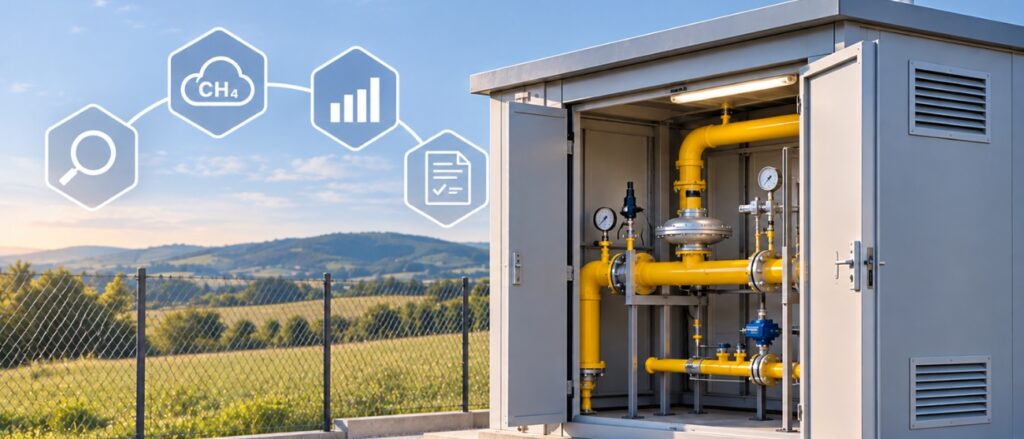
The European Methane Regulation has entered a phase where knowing the obligations is no longer enough: for gas network operators, understanding how to quantify emissions and build reliable data is becoming essential.
Regulation (EU) 2024/1787 on methane introduces provisions for the measurement, monitoring, reporting and verification of methane emissions in the energy sector, including the transmission and distribution of natural gas.
But what does this mean in practice for a distribution company? And how can it prepare to report emissions on a solid basis?
Methane Regulation: why quantification matters
Detecting a leak and quantifying emissions are two different activities.
Many detection instruments measure methane concentration in ppm. Quantifying emissions, on the other hand, means estimating how much gas is released into the atmosphere, for example in kilograms per year.
Generic statistical factors are often used, but they do not always reflect the actual conditions of each pressure regulating station. The risk is ending up with a figure to report without knowing how close it is to reality.
Time matters too. A leak of 50 grams per hour, if detected after one hour, results in a release of around 50 grams. If it stays active for 90 days, the total reaches around 108 kg of methane.
This is why, alongside periodic inspections, continuous monitoring can provide additional visibility into the conditions of pressure regulating stations and help detect anomalies promptly.
How to prepare for reporting obligations
The regulatory framework is still evolving. The European Commission has published a draft implementing regulation on methane emissions reporting templates and launched a public consultation.
In this context, getting ready also means building a history of data that is reliable, comparable and well documented. Waiting until every implementation detail has been defined may make it harder to reconstruct the necessary information later on.
The question to ask is a simple one: does the data available today make it possible to understand how much methane each pressure regulating station emits, how this changes over time and which actions deliver results?
MethanEye: from concentrations to emissions
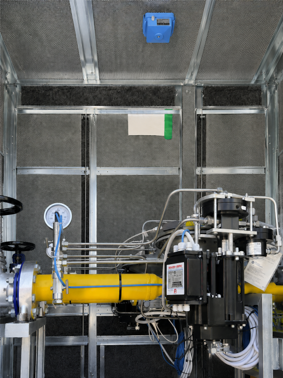
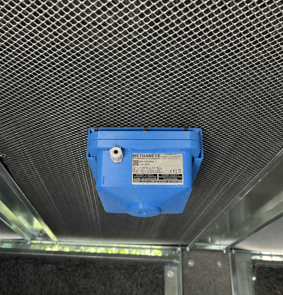
To meet this need, AUTOMA has developed MethanEye, a system that continuously monitors methane inside pressure regulating stations and converts the detected concentration into an emissions estimate in kg per year, specific to each pressure regulating station.
Thanks to a field-validated physical model, operators can obtain a figure that is more representative of the conditions of each pressure regulating station than an estimate based solely on generic statistical factors.
This makes it possible to document assessments, compare emissions over time and identify where to focus reduction efforts.
MethanEye does not replace periodic inspections: it complements them, adding continuity to monitoring and providing useful information for network management.
The time to build solid data is now. Because being ready to report emissions means, first and foremost, knowing them, one pressure regulating station at a time.
For almost 40 years, AUTOMA has been developing monitoring and control systems for gas networks. With MethanEye, it brings this experience to a new need in the sector: turning methane monitoring into concrete knowledge of emissions.
FAQ
What obligations does EU Regulation 2024/1787 introduce for gas distributors?
How are methane emissions quantified at pressure regulating stations?
What is the difference between leak detection and emissions quantification?
Can continuous monitoring complement periodic inspections of gas networks?
How can a methane emissions estimate specific to each pressure regulating station be obtained?

 Project Manager presso Automa S.r.l.
Matteo Campanelli is a Project Manager at AUTOMA S.r.l., with a background in Biomedical Engineering and previous experience in the Oil, Gas & Water sector. At AUTOMA, he led the development of the MethanEye project, the solution for continuous monitoring and quantification of methane emissions in gas infrastructure. He is actively involved in promoting AUTOMA technologies on the Italian and international markets, managing relationships with customers and partners and taking part in industry events and publications.