By Luis Castaño, Cathodic Protection and Networks Manager at Kromschröeder
Based on the presentation delivered at SMART GRID DAYS 2025, October 8–9, 2025.
In this article, we review the evolution of pressure regulation systems in gas distribution networks, with a focus on GOLEM-ZERO and its development towards dynamic regulation applications for biomethane injection.
Modulation and dynamic regulation
Before exploring the evolution of pressure regulation systems, it is useful to clarify two key concepts: modulation and dynamic adjustment.
In gas distribution networks, maintaining stable pressure and flow rate is essential to ensure safety and continuity of supply. To achieve this, operators rely on systems capable of continuously monitoring network conditions and taking corrective action whenever operating parameters deviate from their target values.
In this context, it is important to distinguish between modulation and dynamic adjustment.
Modulation allows pressure or flow rate to be adjusted in order to achieve and maintain predefined target values. This is the application for which GOLEM-ZERO was initially developed, supporting pressure adjustment and flow limitation.
Dynamic adjustment represents the next step in this approach. In addition to acting on the system, it continuously analyzes operating conditions and automatically adapts its behavior in real time to maintain process stability.
This evolution is particularly significant for biomethane injection, where variations in pressure and flow rate can compromise production continuity and may even lead to interruptions in the injection process.
Evolution of pressure regulation systems
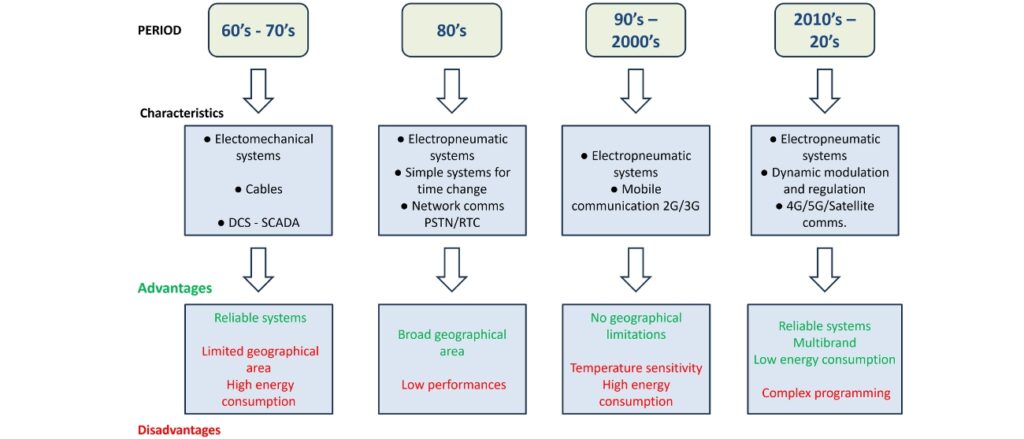
LThe evolution of support systems for pressure regulation can be divided into four main stages:
- 1960s–1970s: Electromechanical systems enabled pressure modulation through hardwired connections. These solutions were reliable but limited to geographically confined installations.
- 1980s: The adoption of telephone lines led to the development of pneumatic systems and time-based pressure variation systems. These offered a wider reach but were sensitive to environmental conditions.
- 1990s and early 2000s: Mobile telecommunications were integrated, removing geographical limitations. However, these solutions were characterized by relatively high energy consumption.
Today: Electromechanical systems such as GOLEM combine mobile and satellite communications. These solutions significantly reduce energy consumption while enabling seamless integration with equipment from different manufacturers.
Pressure and flow modulation functions
Pressure modulation has three main functions:
- Reaching and maintaining a target pressure
- Flow rate limitation
- Adjusting pressure during specific daily time slots
Pressure modulation
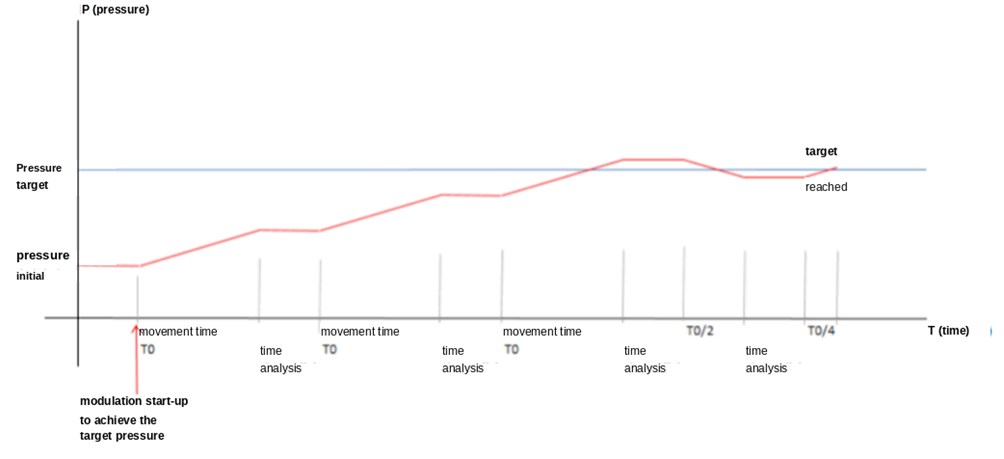
The graph below shows pressure modulation when a certain value is achieved and maintained, and plots the network pressure over time.
When the actual pressure deviates from the target value, the system intervenes with gradual adjustments. After each movement, it analyzes the resulting effect and decides whether to continue, reverse the direction, or stop. The objective is to bring the pressure back within a defined tolerance range.
If the pressure value maintenance function is active, the system will not take any action until the value falls outside the range known as the “dead band”, avoiding unnecessary adjustments and reducing equipment wear.
Flow rate limitation
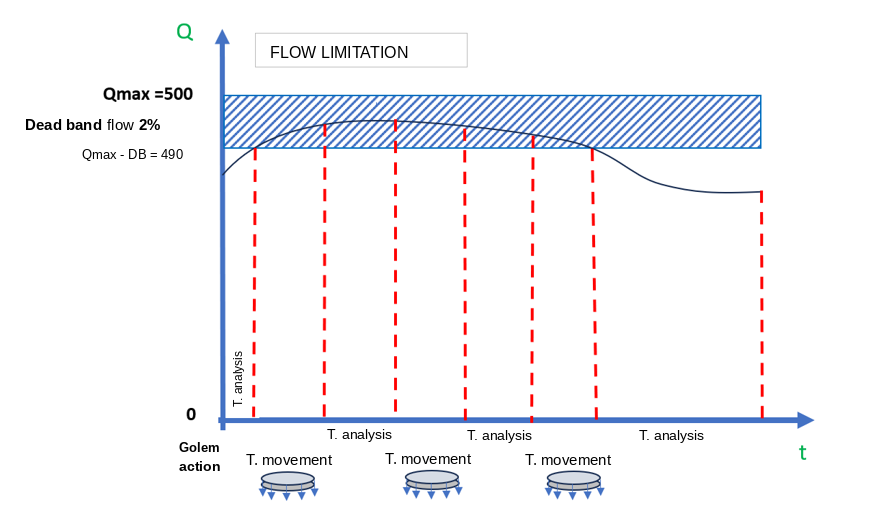
In the graph below, we can see the values for the limited flow rate and the dead band.
Flow rate limitation prevents the flow from exceeding a preset maximum value. When the flow rate approaches the limit threshold, the system intervenes on the flow path and initiates an analysis phase. If the upward trend continues, the system proceeds with further corrections until the flow rate is brought back out of the critical zone.
Weekly pressure profile
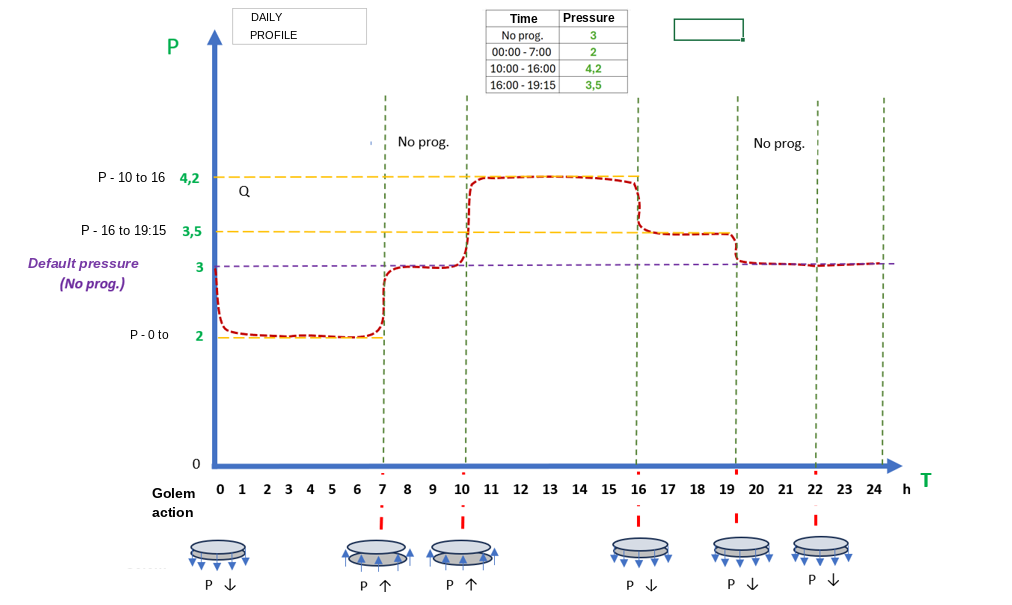
The final pressure modulation feature is the weekly pressure profile, which allows you to define up to three daily periods with a set pressure, in addition to a default pressure for unscheduled hours.
In this way, the system can automatically adjust the pressure value to the various operating conditions expected throughout the week.
Proposal for dynamic regulation
The modulation algorithms developed for gas distribution networks find a new application in biomethane injection. In this scenario, variations in pressure and flow rate can directly affect process continuity, making more dynamic control of operating conditions necessary.
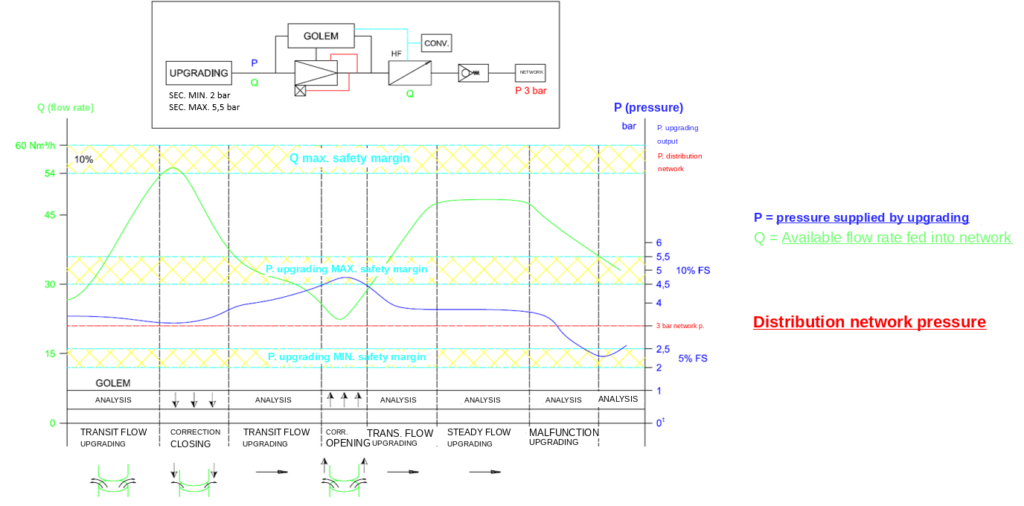
During Smart Grid Days 2019, we proposed applying the GOLEM system to biomethane injection into the grid. That year, we witnessed the launch of Spain’s first biomethane injection system and observed the challenges associated with injecting small flow rates into large networks. At the time, we presented the graph below, which shows the flow rate and pressure variables, as well as the points or ranges of extreme conditions that the dynamic adjustment system must avoid.
This highlights the need for dynamic adjustment capable of monitoring pressure and flow rate and preventing extreme conditions that could compromise the continuity of injection.
Dynamic regulation functions for biomethane injection
Since then, the GOLEM-ZERO system for biomethane injection has evolved to incorporate three dynamic regulation functions:
• limiting the maximum flow rate and increasing the flow rate when it falls below minimum values
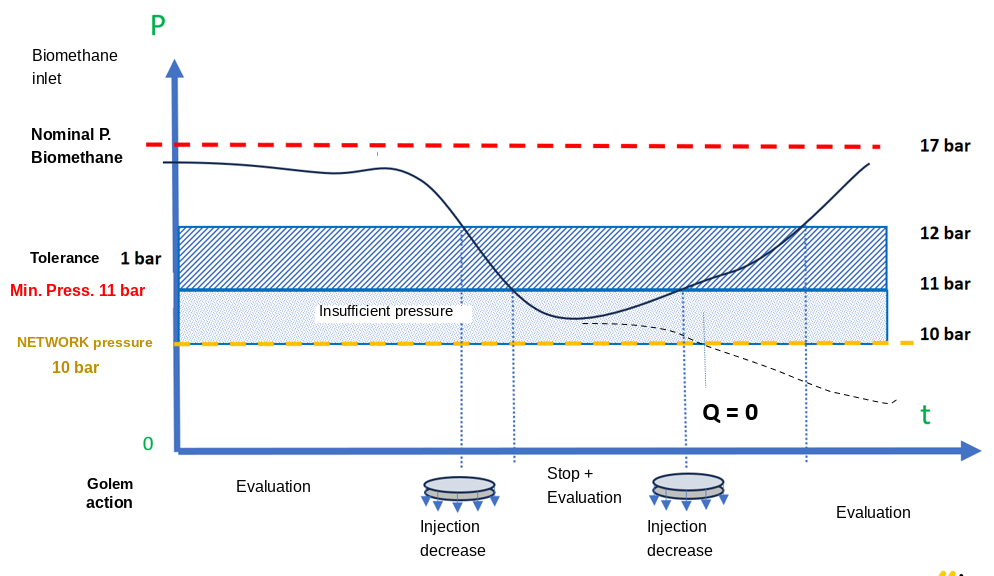
• reducing the flow in response to a decrease in biomethane inlet pressure
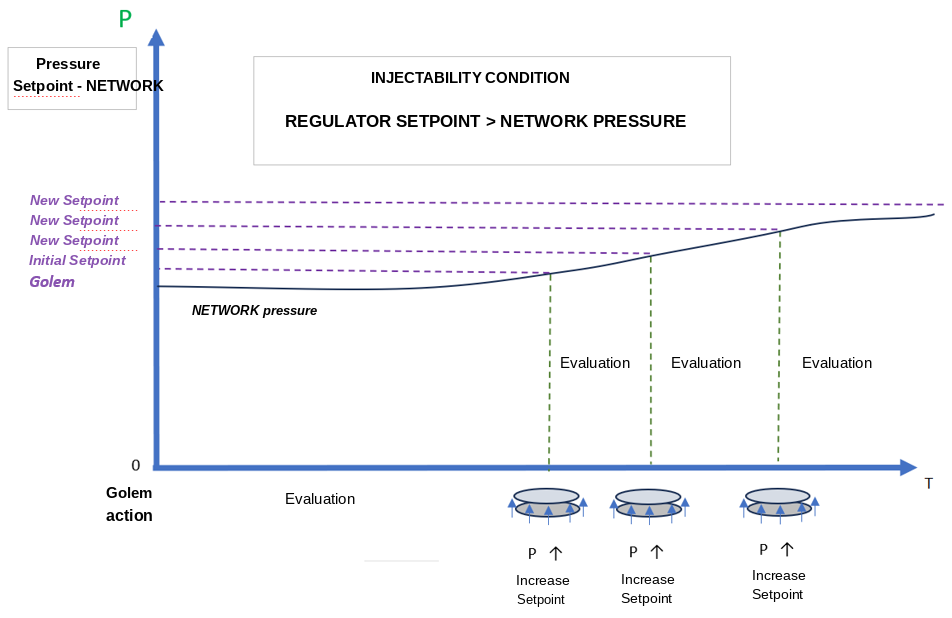
• increasing the set point in response to a rise in network pressure.
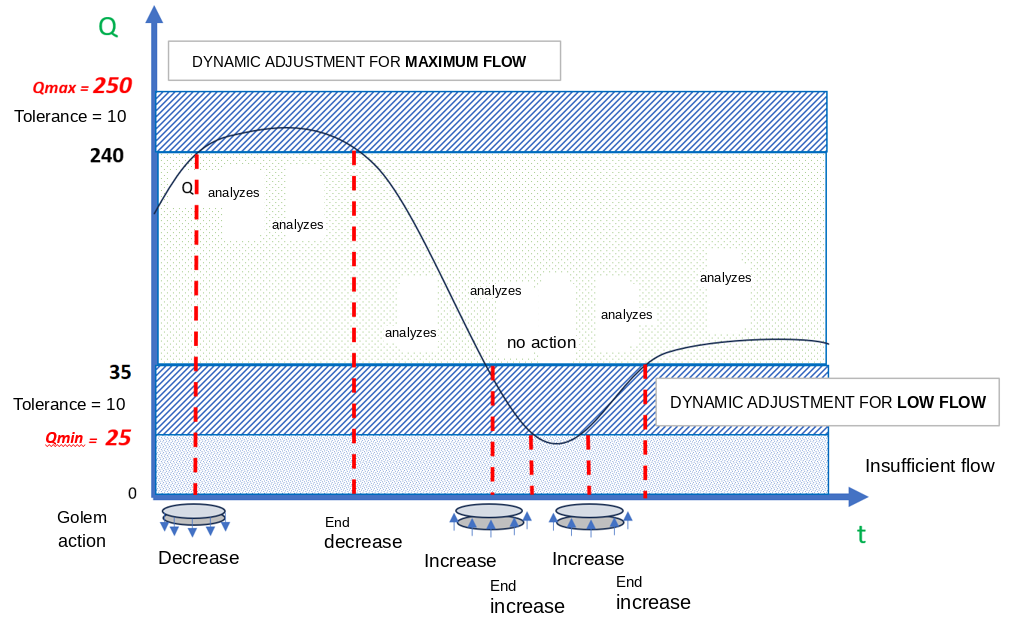
This flow rate graph shows the maximum recorded flow rate minus the tolerance.
GOLEM-ZERO continuously monitors the injection flow rate and intervenes when it approaches the defined limits. When the flow rate approaches the maximum allowed threshold, the system gradually reduces the flow cross-section to prevent that limit from being exceeded. Similarly, when the flow rate approaches the minimum operating level, the system attempts to increase the flow rate to restore normal operating conditions.
If, on the other hand, the flow rate falls below the minimum threshold, the system stops intervening and remains in analysis mode until conditions allow for a stable restoration of operation.
The same logic is applied to the biomethane inlet pressure, with the aim of preventing conditions that could reduce or interrupt injection into the grid.
If the inlet pressure approaches the minimum limit, the system reduces the injection rate to facilitate pressure recovery. If the downward trend continues and the pressure enters an insufficient range, the system suspends operations and remains in analysis mode.
If the pressure recovers, the system continues to modulate injection to restore the process to stable conditions. If, on the other hand, the pressure continues to decrease until it approaches the grid pressure, injection may stop and the flow rate may drop to zero.
The final function integrated into GOLEM-ZERO involves increasing the set point in the event of a rise in network pressure. When network pressure rises, the system can gradually increase the set point to keep the injection active and prevent process interruptions.
The increase continues as long as the physical conditions of the plant allow it.
For more detailed information, you can also download the full white paper.
Would you like to learn more about GOLEM’s capabilities and applications?
Contact us with no obligation.

Cathodic Protection and Communications Leader at Kromschroeder
Luis Castaño leads the operations team within the Energy Management Group responsible for the marketing, after-sales support, and industrialization of products for the remote management of cathodic protection, as well as for remote communication and control in gas distribution networks.